 Foundations are important. There is a parable of two builders. One builder builds his house on a solid foundation. When storms come, the house remains standing. The other builder builds his house on the sand. When storms come, the house falls.
Type of Literature
Foundations are important. There is a parable of two builders. One builder builds his house on a solid foundation. When storms come, the house remains standing. The other builder builds his house on the sand. When storms come, the house falls.
Although the intent of this parable is to teach a lesson about faith and spirituality, the principle of this parable applies to developing a solid plan for a research study or manuscript that suggests the need for future research. A review of literature provides a solid foundation.
Often educators and researcher use the term, "literature review" without recognizing that this can sometimes be an elusive term for students. So, this instructional unit begins by first discussing what a literature review is. It then, overviews various types of literature or sources in which a literature review contains.
 By the end of this instructional unit, you should be able to:
Define a literature review
Distinguish between various types of literature.
The literature review consists of 2 parts:
The process is the literature search. A literature search is "a systematic and thorough search of all types of published literature in order to identify as many items as possible that are relevant to a particular topic" (Gash, 2000, p.1).
In writing a dissertation, you should expect to review between 1,000 to 2,000 articles. When conducting a review of the literature on topic and writing an article, it is not uncommon to read 100 or more articles.
In the product, you may only include 10- 20% of what you review as you write a narrative and engage in a critical dialogue with researchers and theorists on your topic.
The product is the written document that is a coherent argument that leads to
This is an argument written from your perspective or a written synthesis of the literature arranged around themes from your critical perspective.
One of the most informative definitions of a literature review we have found is the following:

The literature review is …
where there is extensive reference to related research and theory in your field; it is where connections are made between source texts you draw on and where you position yourself and your research among other sources. It is the opportunity to engage in a written dialogue with researchers in your area while at the same time showing that you have engaged with, understood and responded to the relevant body of knowledge underpinning your research. The literature review is where you identify theories and previous research which influenced your choice of research topic and the methodology you are choosing to adopt. You can use the literature to support your identification of a problem to research or illustrate that there is a gap in previous research that needs to be filled. The literature review, therefore, serves as the driving force and the jumping off point for your own research investigation. (Ridley, 2008, p.2)
When constructing a literature review, you want to ensure that it does the following:
Your literature review should logically lead to a conclusion about a practice or need for more research. Take for example, literature review articles such as these from the university databse:
For a dissertation or research article, a literature review should lead to your research problem, purpose, and questions, which in turn, leads to the identification of your research approach and design.
As you conduct a review of the literature, you need to understand that there are different types of literature. For example, there is:
Contained within your review of the literature, the majority of the literature need to be peer-reviewed empirical, or theory pieces. Popular press and grey literature should be used sparingly.
In this unit, we spend some time discussing the different types of literature that should be contained within your literature review.
Before continuing to define different types of literature, let's define "peer-reviewed."
"What is peer-reviewed?"
In academic publishing, peer review is a process used to assess the quality of an article submitted for publication. Before an article is deemed appropriate to be published in a peer-reviewed journal, it must undergo the peer-review process:

Because a peer-reviewed journals will not publish articles that fail rigorous peer review, it is accepted that such journal only publish exemplary work.
The librarians at Lloyd Sealy library suggest asking the the following questions you are determining whether or not the article you found is a peer-reviewed article and whether or not you should include it in an academic paper:
Want to learn more? Anali Perry, a librarian from Arizona State University Libraries, gives a quick definition of a peer-reviewed article .
Now that you understand what peer reviewed is, let's review different types of literature.
Literature or narrative reviews and meta-analyses are both considered "review articles" and are similar in many ways:
Where literature reviews and meta-analyses differ are in the type of articles reviewed and how the findings are presented.
We'll start by discussing meta-analyses.
Meta-analyses are characterized by the following:
In summary, meta-analyses are your "quantitative" research reviews, and results are commonly reported in tables. If you are lucky and your topic is a well-researched one, you may even come across a mega-analysis, which is a meta-analysis of overall effect sizes produced from other meta-analyses.

Literature reviews on the other hand, would be considered your "qualitative" literature reviews. When an intervention has not yet been evaluated quantitatively or the body of literature on the topic is still developing, there may not be enough studies to conduct a rigorous meta-analysis. Further, given the topic, the body of literature may include rigorous quantitative studies and qualitative studies, which naturally do not generate statistical findings or produce effect sizes. In this case, literature reviews, also sometimes referred to as narrative research syntheses or integrative reviews, are needed to discuss quantitative and qualitative studies.
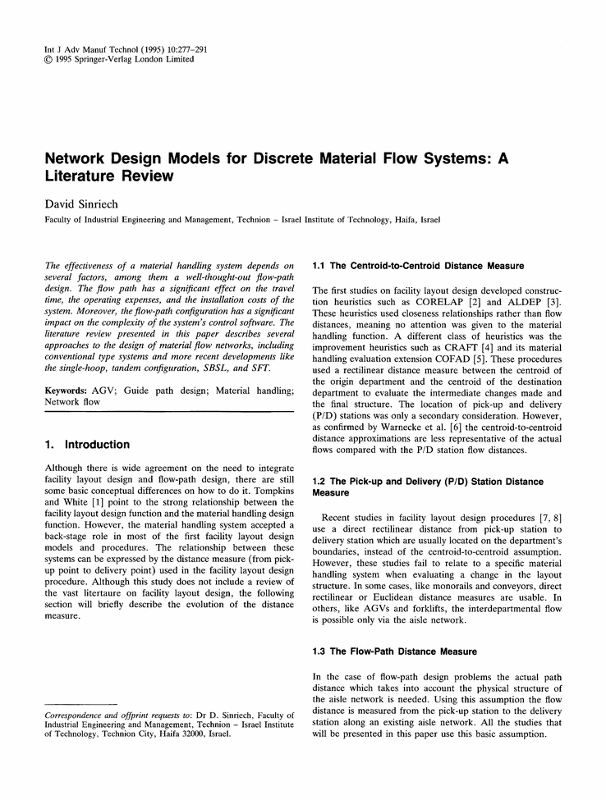 These reviews are characterized by the following:
To broadly summarize, meta-analyses combine statistical findings from strictly quantitative research studies in order to produce an overall effect size, whereas literature reviews combine findings from both qualitative and quantitative studies and the conclusions are discussed in narrative form.
As you search for meta-analyses and literature reviews, be sure that you are identifying an actual meta-analysis or literature review, which means that the findings from multiple studies were systematically and rigorously synthesized.
Don't get confused!
Students often confuse the review of literature that is a required section at the beginning of good research studies for an actual reviews.
Students also frequently mistake a practitioner oriented article where the authors discuss a specific educational approach or intervention that includes some findings from recent studies to support the teaching approach or intervention and identify it as a literature review. However, these are not rigorous systematic reviews of the literature but rather explanatory or informational articles geared toward practitioners.
Remember to look for the elements discussed:
Let's talk about research articles next and how you can identify them. The vast majority of research reports are published in academic, peer-reviewed journals. You should only use peer-reviewed research articles as they are typically the only types of articles considered credible from a research standpoint.
The academic journals are most easily accessed through university library databases. Academic Search Complete, PsycArticle, and PsycInfo, and Education Research Complete are a few examples.
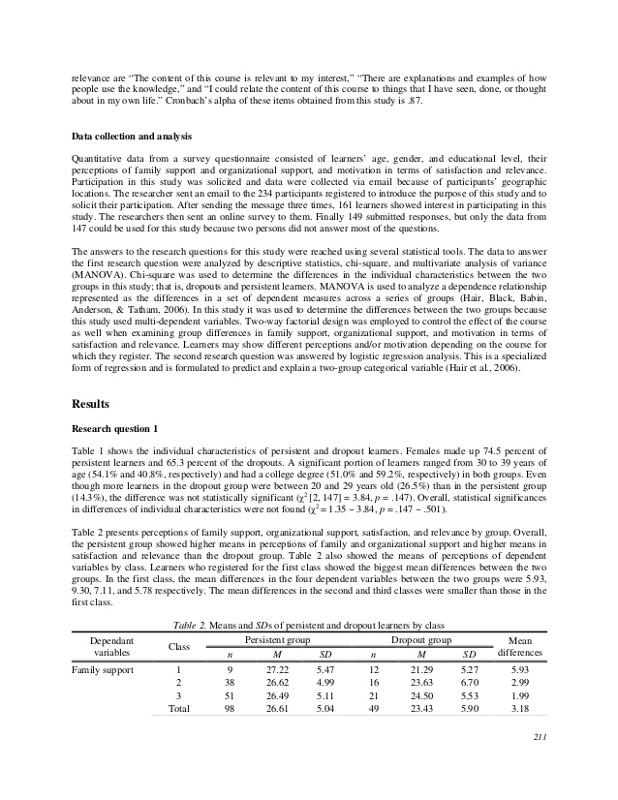 In research articles, researchers describe how they identified the problem, made relevant observations to gather data, and analyzed the data they collected. The report usually concludes with a discussion of the results and their implications. Research articles have a specific format, and they usually have 5 primary features:
An abstract is a summary of the research report. It is usually between 100 to 250 words. APA journals usually specify 240 words or less. A well written abstract for a research article should include the problem under investigation and purpose of the study; the participants and general methodology; the findings, including statistical significance levels; and the conclusions and implications or applications of the findings. As you can see, the abstract summarizes each of the key features of a research article. You should be able to simply read the abstract and determine whether or not you are reading a research article.
The introduction and literature review sections of the article provides
The methods section describes how the study was conducted with sufficient details that would enable another researcher to replicate the study. The methods section is generally divided into subsections. Although subsections may vary across manuscripts and journals, these subsections usually include a participant section, a settings section, an instrumentation or materials section, and a procedures or data collection section.
In the results or findings section, the researcher identifies the data collected and the type of analysis used. For example, in a quantitative research article, the researcher often includes results of assumption tests for the chosen statistical procedure, descriptive statistics, the statistical procedure (e.g. t test, ANOVA, MANOVA), the effect size, the power, and the decision to reject or fail to reject the null hypothesis.
In the last part of the research article, the discussion and conclusion, the results or findings are summarized, evaluated, and interpreted. This section usually includes:
As a student thinking about a dissertation in the near future, you want to pay special attention to the discussion of limitations and recommendations for future research as this often identifies gaps in the literature or area in which you could contribute knowledge to the discipline- a dissertation topic.
The research article usually ends with the conclusion. The conclusion succinctly summarizes the primary findings and concludes the manuscript.
Speaking of conclusion, this concludes our discussion of how to identify a research article. As you identify research articles, ensure that they are scholarly and professional in nature. That is, ensure that the article:
Another type of literature you need to be familiar with is theoretical literature, which may be in the form or an article or book.
Generally, you will use one or two theories as a framework-- "the structure, the scaffolding, the frame of your" scholarly work (Merriam, 2001, p. 45).
To learn more about the application of theoretical frameworks read Rockinson- Szapkiw, Spaulding, and Swezey's (2014) chapter, Right-Sizing Your Research Method ; Ravitch and Riggan's (2012) Reason & Rigor: How Conceptual Frameworks Guide Research; or Anfara and Mertz (2006) Theoretical Frameworks in Qualitative Research.
In simple terms, a theory piece presents a specific theory. Theory pieces synthesize existing research, and often existing concepts and theories, and propose a new framework or theory for understanding a phenomenon.
There are many examples of theory:
Kerlinger (1979) reminds us that a theory is "a set of interrelated constructs (variables), definitions, and propositions that present a systematic view of phenomena by specifying relations among variables, with the purpose of explaining or predicting the phenomena" (p.64).
Every theory has 3 elements (Anfara & Mertz, 2006):
Let's look at an example.

So, if you are wondering if you have a theory piece, you can ask yourself if it has these 3 elements.
Now that you understand what a literature review is and the primary types of literature it contains, it's time for you to select a topic for your literature review and begin identifying various pieces of literature on your topic.